Elevating Creative Projects with Math Digital Papers Patterns
In the evolving landscape of digital design and personal crafting, visual assets that bridge the gap between academic nostalgia and modern aesthetics have found a unique niche. Math Digital Papers Patterns represent more than just background textures; they are a stylistic choice that communicates intelligence, precision, and playful curiosity. For creators, educators, and entrepreneurs, integrating these specific visual elements into projects offers a way to stand out in a saturated market. Whether you are designing educational materials, planning a STEM-themed birthday party, or creating merchandise for an online store, high-quality digital papers provide the foundational layer upon which compelling designs are built.
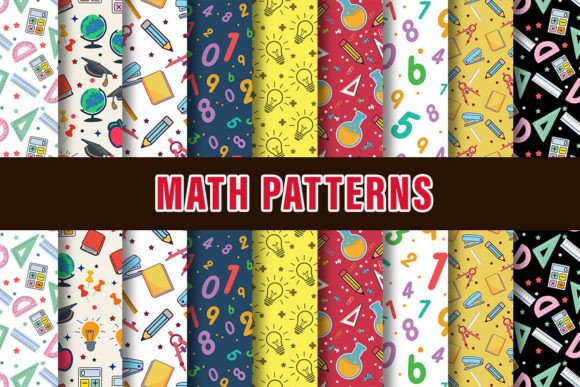
The relevance of these patterns extends beyond simple decoration. In an era where digital content creation has become accessible to everyone, the demand for distinctive, high-resolution assets has surged. Generic stock photos often fail to capture the specific charm required for niche projects. A curated collection of 9 math digital paper backgrounds featuring motifs like rulers, geometric shapes, and equations solves this problem by offering immediate thematic consistency. These assets serve as versatile canvases for invitations, scrapbooking, social media graphics, and printable goods, allowing users to focus on their message rather than struggling to create complex backgrounds from scratch.
The Intersection of Nostalgia and Modern Design Trends
Current design trends show a marked appreciation for retro-academic aesthetics and "dark academia" influences, alongside a sustained interest in STEM education. This cultural shift has made mathematics-related visuals surprisingly fashionable. We are seeing a move away from sterile, corporate minimalism toward designs that feel tactile, learned, and human. Math patterns tap into this sentiment by evoking memories of graph paper, chalkboards, and vintage textbooks. However, modern audiences expect these nostalgic elements to be rendered with contemporary clarity and color sensibilities.
This evolution in taste explains why professionals and hobbyists alike are seeking out specialized digital papers. It is no longer enough to simply overlay text on a solid color. Audiences engage more deeply with content that has visual depth and narrative context. When a tutor creates a worksheet using a subtle ruler pattern background, or a parent designs a birthday invitation with mathematical symbols, they are leveraging a visual language that signals care and specificity. The trend is not just about math itself, but about the aesthetic of learning and discovery. By utilizing dedicated Math Digital Papers Patterns, creators align their work with these broader cultural preferences without needing to be professional illustrators.
Technical Specifications and Practical Workflow Integration
For digital assets to be truly useful in professional or serious hobbyist workflows, technical quality is non-negotiable. The set of 9 digital papers discussed here delivers files in PNG format at 4500×4500 pixels. This resolution is significant because it ensures versatility across both digital and print mediums. At this size, the images maintain crisp edges and vibrant colors when printed on standard letter-sized paper or cardstock, while also providing ample pixel density for high-definition screens and large-format displays.
It is crucial for users to understand the specific nature of these files: these are not seamless patterns. This distinction is vital for workflow planning. Unlike seamless tiles designed to repeat infinitely across a web page, these are standalone compositions. Each of the 9 patterns is a complete, self-contained artwork. This characteristic actually enhances their utility for specific applications like invitation cards, book covers, poster designs, and social media posts where a defined border or central focal point is preferred. Users should approach these assets as individual canvases rather than repeating textures. This means placing text or quotes centrally or utilizing negative space within the specific composition of each paper, ensuring the design remains balanced and intentional.
Applications Across Education, Events, and Commerce
The practical implications of owning a diverse set of math-themed backgrounds are vast, spanning multiple industries and personal interests. For educators and tutors, these papers transform mundane handouts into engaging learning tools. Visual stimulation plays a key role in retention and engagement; a worksheet that looks visually appealing can reduce student anxiety and increase willingness to participate. Teachers can use these backgrounds for certificates of achievement, classroom decor, or digital slide decks, reinforcing a positive association with mathematics.
In the realm of events and celebrations, niche theming is becoming increasingly popular. Parents planning birthdays for children interested in science, engineering, or math often struggle to find decor that isn't overly cartoonish. These digital papers offer a sophisticated alternative suitable for various age groups. They can be printed as cupcake toppers, banner elements, or thank-you cards. Because the files are high-resolution PNGs, they can be easily taken to a local print shop or used with home printers to create custom event stationery that feels cohesive and professionally designed.
For entrepreneurs and creators selling physical or digital goods, original prints are essential for product differentiation. Print-on-demand businesses, Etsy sellers, and stationery designers can utilize these patterns as the base for notebooks, planners, mugs, and apparel. The ability to simply add a quote, logo, or personalized text over a high-quality background streamlines the production process. Instead of spending hours drawing a ruler texture or arranging equation vectors, business owners can allocate that time to marketing and customer service. The non-seamless nature of these papers works particularly well for discrete products like greeting cards or framed art, where the image is meant to be viewed as a singular piece rather than a continuous surface.
Navigating Creative Constraints and Maximizing Value
While having access to 9 distinct patterns provides variety, successful implementation requires thoughtful design choices. Because these are not seamless, users must respect the boundaries of the 4500×4500 pixel canvas. This constraint encourages better design discipline. Rather than lazily tiling a background, creators are prompted to consider hierarchy and layout. Where does the eye naturally travel in this specific pattern? How does the placement of a ruler or a cluster of numbers affect where text should go?
To maximize the value of this asset pack, consider the following practical recommendations:
- Contrast Management: Ensure that any text or quotes added to the papers maintain high readability. If a pattern is dense, use a semi-transparent overlay box behind your text or choose areas of the pattern with natural negative space.
- Color Harmony: While the papers come with established color palettes, digital editing software allows for hue adjustments. Tweak the saturation or brightness to match specific brand guidelines or party themes without losing the integrity of the original pattern.
- Scale Awareness: Always preview the design at actual print size before finalizing. Elements that look appropriately sized on a monitor may appear too small or too large on physical paper. The 4500px dimension allows for scaling down without quality loss, but scaling up should be avoided.
- Layering Techniques: Treat the digital paper as the bottom layer of a multi-layered composition. Combine it with other elements like hand-drawn doodles, photographs, or typographic treatments to create a unique final product that doesn't look like a template.
The Shift Toward Authentic Digital Assets
The market preference for assets like these Math Digital Papers Patterns reflects a broader shift toward authenticity in digital creation. Users are moving away from hyper-generic, AI-generated noise and toward assets that feel curated and purposeful. There is a tangible difference between a randomly generated texture and a designed pattern that understands the iconography of mathematics. The inclusion of recognizable elements like rulers and specific notations suggests a level of intentionality that resonates with buyers and end-users.
Furthermore, the licensing and usage rights associated with digital papers have evolved. Creators today need assets that allow for commercial application without legal ambiguity. Having a clear set of 9 original patterns provides peace of mind for business owners who want to build products without worrying about copyright infringement. This security is as valuable as the aesthetic quality of the files themselves. In a gig economy where side hustles and freelance design work are common, accessible, high-quality, and legally safe assets are fundamental infrastructure.
Ultimately, the value of these digital papers lies in their ability to democratize good design. They lower the barrier to entry for creating professional-looking educational resources, memorable event stationery, and sellable merchandise. By providing a strong visual foundation, they allow the user's creativity to flourish in the details—the choice of font, the wording of a quote, the arrangement of a photo collage. As digital and physical creative practices continue to merge, assets that offer high resolution, thematic relevance, and practical usability will remain essential tools for the modern creator. Whether for a child’s birthday, a classroom lesson, or a new product line, these math patterns offer a blend of form and function that meets the demands of today’s diverse creative landscape.