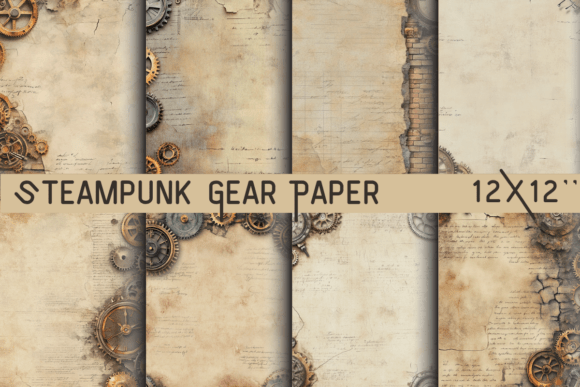
Steampunk Gear Paper: Vintage Industrial Design Assets
Creating authentic vintage aesthetics in digital and physical projects requires more than just a sepia filter. True industrial design relies on texture, depth, and mechanical complexity. The Steampunk Gear Paper collection addresses this need by providing high-resolution backgrounds that merge intricate clock gears, brass machinery elements, and antique metal textures into cohesive visual assets. These are not merely decorative overlays; they are foundational layers designed to bring mechanical vintage energy to scrapbooks, junk journals, fantasy stationery, and professional graphic design layouts.
For creators working across both print and digital mediums, resolution is often the limiting factor. This digital pack delivers 12 distinct designs at 3600 × 3600 pixels with a density of 300 DPI. This specification ensures that whether you are printing a 12x12 scrapbook page or designing a web banner, the fine details of copper cogs and rusty metal tones remain crisp. The opaque, non-transparent backgrounds serve as robust canvases, eliminating the need for complex masking while providing immediate atmospheric depth to any composition.
Technical Specifications for Professional Output
Understanding the technical parameters of your assets is essential for maintaining quality in final deliverables. Each file in this collection ranges from 8 to 18 MB, indicating a high level of pixel data and color information. This weight is necessary for preserving the subtle gradients found in antique bronze and charcoal black tones. When working with these JPG files, consider the following technical best practices to maximize their utility:
- Print Fidelity: At 300 DPI, these papers are optimized for standard commercial and home inkjet printing. The 12x12 inch dimensions align perfectly with standard scrapbooking formats, but the resolution allows for scaling down to smaller ephemera sizes without losing edge definition on gear teeth or rivet heads.
- Color Management: The palette features metallic simulators including brass gold, copper brown, and rusty metal. Because these are rendered on opaque backgrounds rather than using actual foil stamping, lighting conditions during photography or scanning will affect the perceived shine. For digital use, adjust brightness and contrast curves to enhance the metallic illusion based on your specific display environment.
- File Organization: Given the large file sizes, maintain an organized asset library. Create dedicated folders for "Master Files" and "Working Copies." Always edit on a copy to preserve the original 3600px source, ensuring you can return to full resolution if project requirements change later.
Applications in Analog Crafting and Junk Journaling
The tactile nature of junk journaling and mixed media art demands backgrounds that can withstand layering. Steampunk Gear Paper functions exceptionally well as a base layer because the busy mechanical patterns provide visual interest even when partially obscured by photos, tickets, or handwritten notes. The industrial aesthetic creates a narrative of history and invention, which is central to the steampunk genre.
When using these papers for physical crafts, the opaque background acts as a stabilizer. Unlike thin digital prints that may warp under glue or medium, the visual density of these designs helps mask minor imperfections in adhesion or paper grain. Crafters can utilize the darker charcoal and rust tones as framing devices, placing lighter ephemera in the center to create natural focal points. The intricate cogwork also serves as a guide for placement; align text blocks along the horizontal lines of machinery or curve journal entries around circular gear clusters to integrate typography with the background art organically.
Digital Design and Content Creation Strategies
For bloggers, marketers, and digital designers, these papers offer a shortcut to establishing a niche brand identity. In an era of minimalist flat design, the maximalist detail of steampunk stands out. Use these backgrounds for social media templates, podcast cover art, or website headers where a sense of craftsmanship and retro-futurism is desired.
The challenge with detailed backgrounds in digital design is readability. To maintain accessibility and clarity, treat the Steampunk Gear Paper as a texture rather than a foreground element. Apply a solid color overlay with reduced opacity (between 40% and 70%) to mute the mechanical details before adding text. Alternatively, use radial gradients or vignettes to darken the edges and lighten the center, creating a clean negative space for headlines. This approach retains the industrial atmosphere while ensuring that marketing messages or blog titles remain legible against the complex brass and copper patterns.
Adapting Aesthetics for Diverse Audiences
While the core aesthetic is industrial, the application should shift based on the target demographic. The versatility of the color palette allows for significant stylistic adaptation:
- Educational and Historical Contexts: For educators or museums creating materials about the Industrial Revolution or Victorian engineering, focus on the realism of the gears and metal textures. Pair these backgrounds with archival fonts and factual diagrams. The brass and bronze tones evoke authenticity and academic rigor suitable for lesson plans or exhibit signage.
- Fantasy and Gaming Communities: Tabletop RPG players and fantasy authors often seek visuals that suggest magic-infused technology. Here, the rusty and charcoal elements take precedence. Combine these papers with glowing effects or ethereal overlays to soften the hard industrial edge, transforming mechanical parts into mystical artifacts. The high resolution supports detailed zooming for digital maps or character sheets.
- Modern Maker and DIY Brands: Small business owners selling handmade goods can use these textures to convey quality and durability. Focus on the clean brass gold and copper brown areas to suggest premium materials. Use the mechanical motifs as borders or corner accents rather than full-page backgrounds to keep product photography sharp and uncluttered.
Maintaining Visual Consistency Across Projects
A common pitfall when using themed digital packs is overuse, which can make a portfolio or journal feel repetitive. To keep results fresh and effective, vary how the Steampunk Gear Paper is deployed. Rotate between full-background usage, cropped sections, and blended textures. Extract individual elements by cropping tight squares of specific gear clusters or metal plates to create custom borders, dividers, or bullet point icons. This maximizes the value of the 12 included designs by treating them as modular components rather than static images.
Consistency also extends to complementary elements. When pairing these industrial backgrounds with other assets, select typefaces and graphics that share similar weight and era-appropriate styling. Heavy serif fonts, typewriter faces, and hand-drawn technical illustrations harmonize well with the mechanical density. Avoid sleek, modern sans-serifs unless heavily modified, as they can clash with the vintage grain. By respecting the visual language of the source material, creators ensure that their final projects feel intentional and professionally curated rather than assembled from disparate parts.
Ultimately, the value of this collection lies in its ability to bridge the gap between digital convenience and analog authenticity. Whether producing a tangible heirloom scrapbook or a digital marketing campaign, the high-resolution mechanical details provide a rich, immersive foundation. By applying thoughtful layout strategies and adapting the industrial palette to specific audience needs, creators can transform these brass and copper textures into compelling storytelling tools that resonate with viewers and readers alike.